Just What is a Safety Manager, Anyway?

If you work in a warehouse or in the manufacturing or construction industries, you’ve likely heard the safety manager mention a time or two. What is a safety manager, exactly? A safety manager is responsible for creating a healthy and productive workspace. The manager creates and executes health and safety plans. He or she prepares and enforces workplace safety policies and protocols. The manager also verifies that a workplace is run in accordance with OSHA safety requirements. Your business needs a safety manager who can protect its workforce and ensure it complies with OSHA mandates. This manager can become a key contributor within your company. And he can help your business realize its full potential.
What Does a Safety Manager Do?
Ever wondered what a safety manager does? On a daily basis, safety managers’ top priority is keeping the workplace free of hazards. If hazards can’t be removed, safety managers must find ways to limit risk. For example, adding extra lighting in dimly lit areas, installing non-slip tread strips or anti-slip coating on slippery floors, or installing pallet rack guards in storage areas may help reduce the risk of workplace accidents and injuries. Safety managers also need to ensure that all hazards are clearly marked. This can be done with signs, posters, labels, floor markings, color codes, and more.
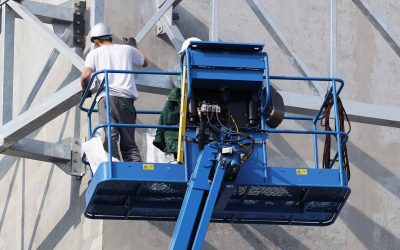
The next order of business is ensuring that workers adhere to the company’s safety guidelines. All workers need to know their employer’s safety procedures. They also need to receive training that verifies they know how to safely operate equipment. This includes requiring workers to get the proper aerial lift certifications. It also involves enforcing lockout/tagout procedures to safeguard workers from unexpected machine or equipment startup.
Safety managers must also analyze job hazards to reduce risk. This starts by listing the hazards associated with each job. The next step is to determine what triggers these hazards. Then, the manager explores ways to improve workplace safety. One of the best ways to improve on-the-job safety involves encouraging workers to report “near misses,” accidents that almost happened but didn’t. These close calls reinforce the need to work safely at all times.
Safety Manager Duties
Asking what a safety manager is is really just the beginning. Looking into the typical duties of a safety manager can help you understand this job more thoroughly. Here are just a few of the tasks these professionals handle:
1. Reinforce Safety Training
Safety managers can provide workers with daily reminders about safety. These can come in the form of booklets, brochures, fact sheets, posters, and more. Live workshops and online training courses also help keep safety top of mind with workers.
2. Keep a Workplace Clean and Neat
OSHA states that all working surfaces should be free of hazards. These include sharp objects, loose floorboards, leaks, spills, snow, ice, and more. “Clean” best practices include keeping all floor surfaces clean and well-maintained, seeing that storage areas are not crowded with items that belong elsewhere, and discarding seldom-used and unnecessary tools.
3. Enforce the Everyday Use of Safety Equipment
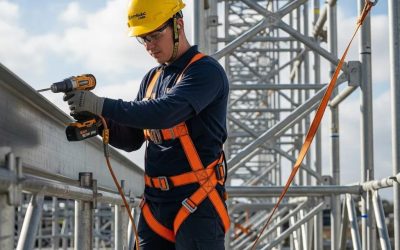
Safety manager duties include providing the right personal protective equipment (PPE) to their employees. This can include everything from hard hats and safety glasses to fall protection gear for aerial lifts. The safety manager also ensures that workers wear their PPE on the job.
4. Ensure Floors and Pipes Are Properly Marked
Floor marking can increase warehouse safety and worker efficiency. Safe floor marking consists of separate paths for forklifts and pedestrians, marking posts, speed bumps, and other hazards with reflective tape, using striped hazard tape around loading docks, curbs, and other exposed edges, and having dedicated storage areas for inventory, machines, and other equipment. A safety manager also ensures that all pipes have color-coded labels to indicate their contents.
5. Conduct Safety Inspections and Audits
During a safety inspection, a safety manager can identify hazards and unsafe practices at a worksite. The manager also ensures that safety measures are in place and properly followed. Ultimately, a safety manager uses a safety audit to take a big picture look at the entire safety program. This includes measuring the program’s outcomes to determine whether they meet the stated safety goals. Furthermore, a safety inspection allows a safety manager to identify outdated safety procedures, recurring safety problems, underused best practices, and opportunities to improve safety training.
6. Use Signage to Promote Safety Awareness
Safety managers should post hazard warnings in highly visible areas. Signs that remind workers to wear PPE should also be posted. Signs that direct floor traffic and point out emergency exits are also important.
7. Recognize Employees Who Prioritize Workplace Safety
Workers who follow company safety practices should be recognized for their good work habits. This will reinforce the desired behaviors and encourage other workers to practice good safety habits. Anyone eager to learn how to be a good safety manager would do well to acknowledge those who model best practices on the job.
Safety Manager Job Description
As mentioned above, safety manager duties are the definition of expansive. You may be curious about what their job description says about those duties. While every job description varies slightly, safety managers are generally responsible for their colleagues’ safety and must provide a safe work environment. To do so, the safety manager must set clear safety guidelines. They must align with OSHA standards; a manual outlining all safety policies and procedures is required.
Safety managers are also required to stay up to date on the latest OSHA updates. They have to monitor safety equipment and keep workers informed about new policies. On occasion, this may mean training employees on new skills or techniques. The safety manager must conduct workplace inspections to ensure the environment is indeed safe. They are also required to investigate accidents and create detailed reports on what happened.
FAQs About Safety Managers
We’re often asked: What is a safety manager? That’s far from the only question we get on the subject, though. Here are a few more FAQs and their answers:
Is a Safety Manager Really Necessary?
At warehouses and other industrial work environments, safety is always the top priority. But creating a safe work environment requires three key elements:
- A commitment to safety from senior management
- Training that complies with OSHA process safety management guidelines
- A safety manager, i.e., a trained professional who has full oversight of a company’s safety program
Among these three elements, the safety manager is most important — and for good reason. When a diligent safety manager takes the helm of a company’s workplace safety program, a business is well-equipped to protect its employees against a wide range of on-the-job dangers. Safety manager duties help keep everyone at work safe.
Is Safety Manager a Good Career?
Safety managers enjoy strong job security. So long as there are construction jobs to complete, orders to ship from the warehouse, and manufacturing jobs to perform, there will always be a need for quality and safety managers. The work itself is incredibly important, which is why this career can be rewarding. While every safety manager will have their own answer to this question, we find that the role is indeed an excellent career option.
How Hard is it to be a Safety Manager?
The answer to this question varies from one employer to the next. Generally speaking, meeting OSHA workplace safety standards isn’t very difficult. With the right resources at their disposal, safety managers can enjoy long-term career success. Of course, no job is without some stress, but when proactive about their safety manager duties, professionals can easily find success.
How to Become a Safety Manager
There is no one-size-fits-all path to becoming a good safety manager. However, there are several steps employees can take to become safety managers in companies of all sizes and across all industries. These include:
1. Learn the Habits of Successful Safety Managers
Key habits of a successful safety manager include:
- Praises employees who do their part to contribute to a safe, productive work environment
- Recognizes employees who display the value of workplace safety in their day-to-day activities
- Encourages employees to engage in workplace safety training programs and provide feedback regarding on-the-job hazards and other workplace safety concerns
- Does their part in setting a positive example for their coworkers
- Helps workers perform myriad tasks with safety top of mind
- Prioritizes continuous improvement
- Performs regular workplace safety inspections
- Maintains open lines of communication with coworkers
- Knows the names of their coworkers and strives to establish healthy and productive relationships with these workers
- Wants to learn new things every day
- Fosters a culture of safety at all levels of a business
- Ensures workers can come forward, ask workplace safety questions, and receive responses to them right away
- Takes pride in their ability to provide all employees with a safe work environment
- Refuses to settle for “average” workplace safety results
- Stays informed about OSHA safety requirements and other workplace safety mandates
A successful safety manager is a vital contributor to their workplace. He or she fosters a safe, productive work environment, and in doing so, minimizes the risk of on-the-job accidents, injuries, and fatalities.
2. Know the Requirements to Become a Safety Manager
To become a safety manager, you will need to become familiar with OSHA regulations. Many safety managers also possess at least a four-year college degree.
If you want to become a safety manager, you may want to discuss your career aspirations with your employer. With your employer’s assistance, you may be able to get the training you need to become an OSHA safety manager. Plus, you can show your employer that you want to do everything possible to make your work environment as safe and productive as possible.
3. Earn a College or University Degree
Most companies require an OSHA safety manager to have a bachelor’s degree in engineering. The discipline could be in a variety of areas, such as:
- Electrical
- Chemical
- Mechanical
- Industrial
Many employers will offer a safety manager role to those who possess a degree in industrial hygiene or environmental safety. Employers also value real-world experience gained through a college apprenticeship program.
High school students who aspire to become a safety manager may want to consider a heavy course load that includes advanced math and science courses such as calculus, chemistry, and physics. Entry-level safety manager jobs require a B.S. degree, while higher-level jobs usually require a master’s degree. Many safety manager jobs require certifications as well.
4. Work Safely, Every Day
An employee can put their best foot forward every day. That way, this employee can show their employer that he or she is committed to working safely. And the worker may prove they are a viable candidate for a safety manager role.
Meanwhile, an employer can keep an eye out for workers who consistently show the characteristics of successful safety managers. These employees work diligently and do their part to help others avoid safety issues. Furthermore, workers who want to learn as much as possible about on-the-job safety topics may be strong candidates for safety manager jobs.
Of course, hiring a manager for safety can be mutually beneficial. For the business, it can give a worker an opportunity to grow within its operations. At the same time, the employee can build their skill set and accelerate their career growth.
Offering OSHA-approved aerial lift certification training is an excellent starting point for improving workplace safety, too. Once a worker completes this training, he or she can serve as an OSHA-compliant aerial lift operator. From here, the worker can help a company bolster its workplace safety. This employee may even choose to pursue a safety manager position now or in the future.
Prioritize Safety Training in Your Workplace Now
For businesses that want to hire or train OSHA safety managers, you need to start preparing today. If you offer a workplace safety training program, you can provide employees with the insights they need to promote a safe, collaborative work environment. You can take the first step toward teaching your workers how to minimize the risk of on-the-job accidents and injuries. Safety manager duties can go a long way toward fostering a safe work environment, but education must come first.
Regardless of whether an employee wants to become a safety manager or earn their certification to use an aerial lift, CertifyMeOnline.net is here to help. We offer affordable, OSHA-compliant safety training courses that are easy to access at your convenience. To learn more about our safety courses or to enroll your workers in any of our courses, please contact us online or call us today at (602) 277-0615.