
If you require your workers to use a scissor lift, you should provide them with harnesses. A scissor lift harness can protect your lift operators against accidents, injuries, and fatalities. Plus, it can help you comply with OSHA scissor lift safety requirements. Let’s not forget that harnesses can prevent serious falls from scissor lifts, too.
See OSHA Scissor Lift Harness Requirements
To get the most value from scissor lift harnesses, you need to teach workers how to use them correctly. This ensures workers can wear harnesses on scissor lifts and avoid falls.
CertifyMeOnline.net, the leader in training & certification for aerial lifts, scissor lifts, aerial work platforms (AWPs), and other mobile elevating work platforms (MEWPs), provides OSHA-compliant Fall Protection Training as part of our complete line of aerial lift training courses.
Register your company today and get your workers certified! It’s not only the law, but training & certification ensure your company is covered in case of an OSHA audit or investigation.

OSHA Prioritizes Scissor Lift Fall Protection
Falls are the leading cause of death in the construction industry, according to OSHA. They’re also one of OSHA’s top 10 most serious safety violations.
OSHA usually requires construction companies to install a fall protection system, such as a harness and lanyard, whenever a fall of 6 feet or more is possible.
You’re responsible for providing scissor lift fall protection accessories, including safety harnesses, personal protective equipment, and related accessories. When your employees know their safety is accounted for, the result is a happier, more productive workplace…a win-win for everyone involved!
The Scissor Lift Harness Debate: Here’s What You Need to Know
The debate about when to use a fall protection harness on a scissor lift is ongoing, and chances are, it isn’t going away any time soon. In this debate, scissor lift operators are often caught in the middle between safety and efficiency. One reason for the debate with scissor lift workers involves working height. Aerial lifts, boom lifts, and other non-scissor lifts reach significantly higher than scissor lifts, so a safety harness is easier to justify. But remember, OSHA considers any working surface above 6 feet a potential fall hazard.
Many scissor lift operators wonder if they need a harness on a scissor lift. Some say they need a harness to be safe. Others say a harness is unnecessary. So, which is it? To find out, let’s take a closer look at all aspects of the scissor lift harness debate.
What Is a Safety Harness, and Why Is It Important?
Scissor lift harnesses don’t prevent falls, their job is to stop a fall when it occurs. They’re also designed to limit the forces acting on the body during a fall arrest. They do this by using a system of straps and buckles to distribute forces to parts of the body that can best absorb them.
Harnesses also help workers stay upright during a fall, which allows a deceleration device to properly deploy. The deceleration device keeps the spine vertical, so it can absorb the force of the fall. However, this cuts off circulation to parts of the body and can cause blood to pool in the legs.
Safety Harnesses: What Are OSHA Scissor Lift Requirements?
One of the most common questions we receive at CMO is: “Do I need a harness in a scissor lift?” OSHA does not require harnesses or lanyards for scissor lift workers. However, certain jurisdictions, companies, and job sites require the use of a harness when operating a scissor lift. This contradiction of sorts sits at the core of the scissor-lift fall protection debate, which is summarized by two key points:
1. Employers and workers want to adhere to safety regulations. They also want to prevent accidents.
2. Having scissor lift workers wear a personal fall restraint system (PFRS) is cumbersome and inefficient. It can interfere with their work and may be unnecessary.
So, do you need to wear a harness on a scissor lift? The answer depends on local safety standards and job site requirements. To better understand scissor lift harness guidelines, let’s review OSHA’s fall protection standards for aerial work platforms (AWPs).
Pros and Cons of Wearing an OSHA Safety Harness
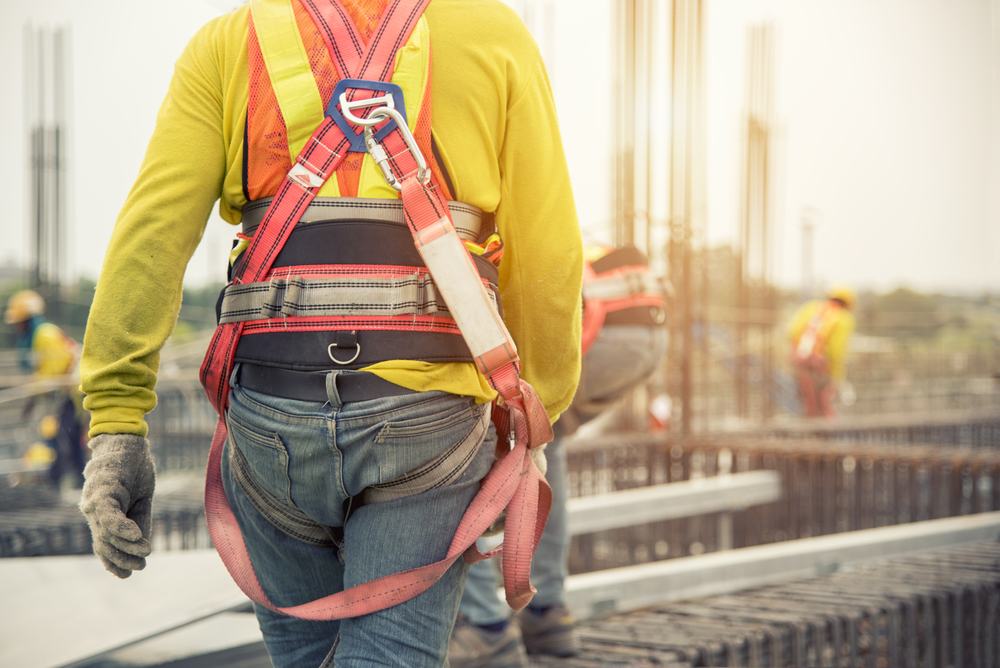
Scissor lift operators are subject to fall hazards due to the fact that they perform tasks at heights. Thanks to OSHA safety harnesses, these operators are well-equipped to avoid falls while performing everyday tasks. Safety harnesses can help reduce the number of scissor lift operator falls and the associated accidents, injuries, and fatalities. Wearing a harness in a scissor lift is one way your company can reduce the chance of falls and related accidents.
Clearly, there are many reasons to wear a safety harness when operating a scissor lift. On the other hand, it is important to note that problems may arise if scissor lift operators wear harnesses while performing everyday tasks.
For instance, if a scissor lift operator is wearing a harness and goes over a lift’s guardrail, they could accidentally cause a tip-over; that is bad enough for the platform worker, but this type of accident also jeopardizes nearby workers, pedestrians, and anyone else on the job site.
Along with the aforementioned argument, opponents of requiring scissor lift operators to wear safety harnesses may point out that scissor lift manufacturers often do not provide an anchor point for operators to connect a snap hook to a lanyard. They may also note that OSHA prohibits tying off a harness to a guardrail.
Ultimately, the pros of wearing an OSHA safety harness on a scissor lift far outweigh the cons. If scissor lift operators consistently wear a safety harness while working at heights, they can effectively protect themselves from falls.
Harness and Fall Protection Standards for Aerial Lifts
OSHA provides general guidelines for AWP workers. It has also created detailed guidelines for the construction industry, and OSHA’s Fall Protection Construction Standards and Resources lay out a comprehensive set of rules for construction workers who use aerial lifts.
According to OSHA, scissor lifts aren’t considered aerial lifts because the work platform for a scissor lift doesn’t extend beyond the wheelbase. Instead, scissor lifts are considered scaffolding. This gives workers more flexibility than other aerial lift operators. Plus, most scissor lifts don’t extend as high as AWPs. This is one of the most important OSHA scissor lift harness requirements to keep in mind.
Scissor Lift Fall Protection Requirements
While OSHA does not require scissor lift workers to wear a harness or other PFRS, that doesn’t mean you shouldn’t. After all, there are many hazards associated with scissor lift use. That’s one reason OSHA requires scissor lifts to have guardrail systems, and also why it’s an important part of fall protection for every type of scaffolding, scissor lift, or aerial lift.
A guardrail is one of the most important types of scissor lift fall protection. Why aren’t scissor lift workers required by law to wear a scissor lift harness? The answer: existing safety rules.
According to OSHA guidelines, all scissor lift operators should:
- Ensure a guardrail system is in place and stable before working. If you’re not sure your guardrails are safe, notify your supervisor immediately.
- Position the scissor lift so it won’t move away from the work platform.
- Stand on the work platform, not the guardrails, at all times. Use caution when approaching the guardrails and never lean over them to perform work; always move the base of the scissor lift to accommodate a different configuration.
- Keep a firm stance with both feet on the platform floor.
OSHA has established the aforementioned guidelines for scissor lift operators, but some job sites might require the use of a PFRS or scissor lift harness. If you are required to wear a harness for any type of scissor lift operation, abide by the local laws and regulations. OSHA doesn’t make “blanket” guidelines for scissor lift workers. However, failing to adhere to onsite safety rules can still result in penalties and fines.
Do I Need a Harness in a Scissor Lift?
While OSHA doesn’t require a safety harness on a scissor lift (scaffolding), certain scenarios may require one. Scissor lift fall protection with harnesses may be necessary, depending on external factors. There are many reasons why scissor lift workers need to wear a harness and an attached lanyard, such as:
• No guardrail system is in place.
• The guardrail is insufficient.
• The worker has left the work platform.
If there’s an adequate guardrail system in place, scissor lift workers don’t need a harness. However, if the guardrail system is insufficient, additional fall protection is needed.
For those who have access to a guardrail system and wear a harness, that’s great, since it’s always better to go the extra mile with your scissor lift fall protection measures. In this instance, the scissor lift fall protection harness provides an extra measure of protection against falls.
How to Wear a Scissor Lift Safety Harness
Workers must receive proper training to ensure they can correctly wear a scissor lift safety harness. The training teaches workers how to put on and take off a harness. It also explains why it is paramount to wear a harness anytime they use a scissor lift. CMO’s Fall Protection Training offers a comprehensive overview and OSHA-compliant instruction regarding scissor lift harnesses.
Meanwhile, if a scissor lift has attachment points, contact the manufacturer for information on when and how to use the tie-off points. You’ll learn about this and much more if you enroll in our OSHA scissor lift harness requirements training program!
Sign Up for Fall Protection Certification Training Today!
CertifyMeOnline.net offers OSHA-compliant scissor lifts, aerial lifts, and AWP safety training, including fall protection classes. With our classes, you can become an expert in elevated work platform (EWP) harness requirements and scissor lift fall protection. To learn more or to sign up for one of our safety training classes, please contact us online or call us today at (602) 277-0615.