The Ultimate Guide to Construction Site Safety 2026
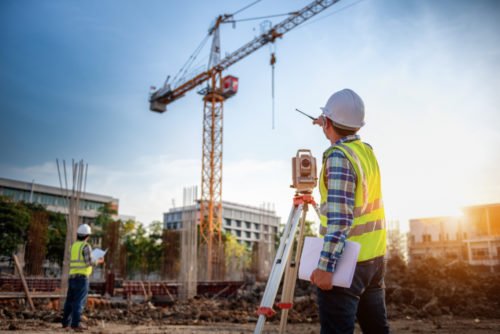
There are constant hazards to be on the watch for on a construction site. By implementing rules and regulations on the job site, workers can stay safe from harm. Such rules prevent dangerous accidents from happening while simultaneously training workers to respond quickly and safely when incidents do occur. Understanding the principles of construction site safety can keep everyone productive and injury-free.
What Defines a Construction Site?
A construction site is any piece of land where the building or renovation of a structure is taking place. These locations typically fall within two main categories: buildings and industrial construction sites. For instance, a new home or hotel fits into the building category, while the construction of a new railroad or tunnel falls into the industrial category. Construction projects vary in their complexity and safety considerations. After an analysis of potential hazards and risks associated with a given construction site, engineers and managers implement plans to ensure the safety of their workers.
Successful, safe construction sites are managed by a wide range of professionals with various skill sets. The construction manager oversees the project from start to finish, while the estimator keeps the job on budget. Architects envision client needs, supervisors manage workers, and construction expeditors manage the flow of materials from the supplier to the project. All of these professionals are guided by various safety regulations and signage. In conjunction, these powerful teams and tools come together to foster a workplace that’s as safe as it is productive.
Your Guide for Construction Safety
They say knowledge is power, and that’s never more accurate than when you’re on a construction site. By understanding the common risks and hazards associated with construction jobs, workers are empowered to prevent accidents and protect themselves from injury. Explore best practices, tips, and tricks for staying safe on the jobsite below:
Safety Tips for Construction Sites
Employers are required by law to provide safe, hazard-free environments for their workers. Construction site accidents can be avoided with proper training and careful adherence to OSHA-recommended safety tips. Discover how to stay safe, healthy, and injury-free while working on construction sites.
Fall Protection Safety Gear
Curious about what items are required on all construction sites? Fall protection gear is a must, especially for aerial lift operators. Learn more about the components of fall protection and why they’re so vital to the safety of construction workers everywhere.
Protective Eyewear for Construction Sites
Our eyes are among the most important and most fragile sensory organs. Even the most minor of construction site accidents can lead to lifelong vision problems, which is why it’s so important to wear protective eyewear on the job. OSHA estimates that 90 percent of eye injuries can be prevented by wearing proper safety eyewear.
Safety Wearables for Construction Sites
Recent advancements in construction site safety equipment make it easier than ever to stay injury-free at work. Construction wearables like smart watches, boots, and helmets are transforming the way workers protect themselves. These user-friendly tools give wearers everything they need to stay productive, efficient, and safe at work.
PPE Requirements for Aerial Lift and Scissor Lift Operators
Foot, head, eye, and face protection are essential for aerial and scissor lift operators working on construction sites. Personal fall protection equipment can also help minimize the risk of injury. Learn more about the personal protective equipment (PPE) required for these professionals.
Managing Risk on Construction Sites
There is an element of risk associated with virtually every construction site. Understanding and managing risk can help protect workers from injury and construction companies from liability. Risk managers create detailed plans for dealing with hazards on the jobsite.
The Benefits of Lean Construction Principles
Lean construction principles have grown in popularity in recent years, and it’s not hard to see why: doing less with more allows construction companies to minimize wasted resources, time, and money. Increased innovation and efficiency make lean construction appealing for construction employees working at every level.
The Role of the Safety Manager
Safety managers help foster safe working environments for construction professionals. By setting clear safety protocols and educating employees on guidelines, these managers ensure construction sites that are as safe as possible. Discover the specific ways in which safety managers add value to every jobsite.
Managing Stress in the Construction Industry
Construction workers face unique stressors while on the job. Long hours, physical labor, and dangerous workplaces can exacerbate that stress. Thankfully, there are several ways for construction workers to manage stress in healthy ways.
Construction Site Safety Tips from the Experts
Safety is of critical importance to construction professionals in everything they do on the construction site. A little knowledge can go a long way in preventing accidents and minimizing injury risks. Make safety a top priority with tips from construction industry experts.
What are the most common destabilizing hazards associated with aerial lifts?
The Most Common Destabilizing Hazards (Ranked by Real-World Frequency)
1. Uneven or Unstable Ground
The #1 cause of tip-overs.
Examples:
Slopes, potholes, curbs
Gravel, dirt, mud, ice
Soft soil over buried utilities
Why it’s dangerous:
Aerial lifts are designed for level surfaces
Even a small slope can shift the center of gravity once elevated
Key takeaway:
Most lift accidents happen BEFORE the platform even moves upward.
2. Overloading the Platform
Often misunderstood and routinely violated.
Examples:
Too many workers
Heavy tools or materials
Uneven weight distribution
Why it’s dangerous:
Exceeding the rated capacity alters stability
Side-loading increases tip risk dramatically
Critical mistake:
“It looks fine” is not a load calculation.
3. Excessive Reach or Improper Positioning
Especially common with boom lifts.
Examples:
Extending horizontally instead of repositioning
Reaching outside guardrails
Leaning ladders or planks from the platform
Why it’s dangerous:
Shifts the center of gravity beyond design limits
Creates leverage forces the lift wasn’t built to handle
Rule of thumb:
Move the lift and don’t stretch limits of the operator.
4. Wind and Weather Conditions
Frequently ignored, rarely forgiven.
Examples:
Gusts over manufacturer limits
Working near open building faces
Storm fronts, downdrafts, thermal winds
Why it’s dangerous:
Elevated platforms act like sails
Wind force increases exponentially with height
Common error:
Operators underestimate wind at ground level vs platform height.
5. Obstructions and Contact Hazards
Both destabilizing and fatal.
Examples:
Overhead beams
Building edges
Power lines
Why it’s dangerous:
Contact can cause sudden jolts
Electrocution often leads to uncontrolled movement or falls
Reminder:
Maintain minimum approach distances at all times.
6. Improper Use of Outriggers or Stabilizers
A setup failure, not an operating failure.
Examples:
Outriggers not fully deployed
Missing cribbing on soft ground
Ignoring level indicators
Why it’s dangerous:
Outriggers are load-bearing safety systems
Partial deployment = false stability
Reality:
A lift that “feels stable” may already be unsafe.
7. Traveling While Elevated
One of the most misunderstood risks.
Examples:
Driving with the platform raised
Turning on uneven surfaces
Crossing thresholds or ramps
Why it’s dangerous:
Movement multiplies instability
Small ground changes become catastrophic at height
Best practice:
Lower → reposition → raise. Every time.
The Pattern Behind Most Aerial Lift Accidents
When investigators review incidents, they usually find one or more of these failures:
Ground not assessed
Capacity misunderstood
Operator rushed
Environmental conditions ignored
Manufacturer instructions skipped
And almost always:
The hazard was visible before the lift left the ground.
OSHA Framing (For Training & Compliance)
OSHA consistently emphasizes:
Pre-use inspections
Ground condition assessment
Load limits
Environmental awareness
Operator training
Not because they’re theoretical, but because these are the exact points where accidents start.
Certifying for Safety
When employees are properly trained and certified to work on construction sites, they’re able to prevent accidents, injuries, and deaths from occurring.
If you’re eager to make safety a priority in your organization, begin with top-quality OSHA-compliant training from CertifyMeOnline.net. In as little as one hour, workers can gain the knowledge they need for OSHA certification. Click here to learn more about the online training courses from CertifyMeOnline.